

All fish
Predators🌍 Introduced

Wels catfish

Silurus glanis Β· Also called Catfish, Cat

The UK's biggest freshwater fish. Wels catfish live in a limited number of stillwaters and need serious tackle.

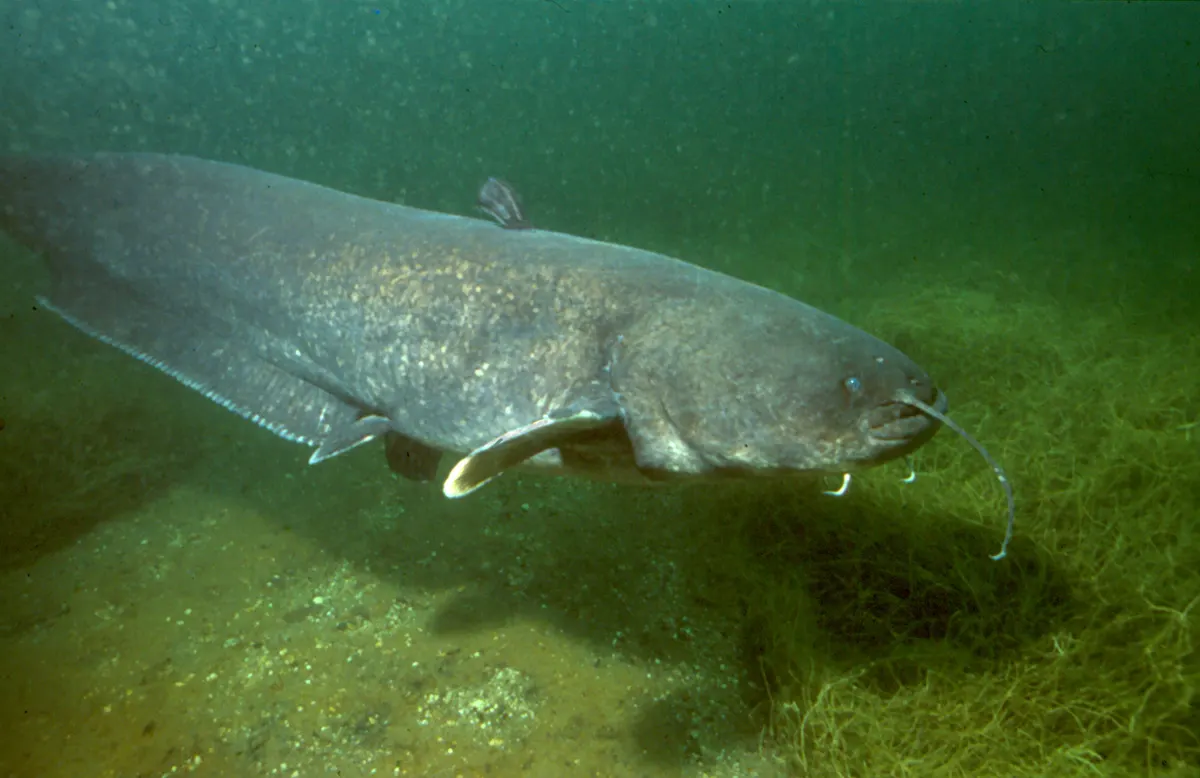
A large wels catfish with long whiskers swimming over weed
Photo: Dieter Florian Β· CC BY-SA 3.0 de
Typical size
10 lb – 40 lb on catfish waters
A good one
50 lb (80 lb+ is a specimen)
Length
100 – 200 cm
Best time
Summer nights

πŸ† British record: 150 lb 3 oz (68.12 kg), Chigborough Fisheries, Essex (2024)

How to spot it

Huge, scaleless, slimy body with a broad flat head, a wide mouth lined with sandpaper-like teeth, tiny eyes and six barbels: two long ones on the top lip and four shorter ones underneath. A very long bottom fin runs most of the way to the tail.

Where to find it

A limited number of stillwaters, mainly in southern and central England. Catfish lie up in snags and deep holes by day.

Find waters near you

Feeding habits

Wels hunt mostly at night, using their barbels and senses to find fish, crayfish, worms and even birds. They feed best in warm water.

Best time: Summer nights.

Favourite baits

  • Large halibut pellets

  • Squid or fish deadbaits

  • A big bunch of lobworms

How to catch it

Catfish rig

Catfish waters, at night

Rod
12 ft rod, 3.5 lb test curve or more
Reel
Big-pit or baitrunner reel
Line
20–30 lb mono
Hook
Size 4–2 strong hook on a 50 lb+ abrasion-resistant hooklength
Bait
Large hair-rigged pellets or squid

Fish near snags and deep water with a strong lead set-up and bite alarms. Most catfish waters have their own rules on kit, so ask the fishery. Never leave the rods.

Handling and rules

You'll need a huge landing net and a big padded mat. Wear a glove: wels are held by the lower jaw, not by the gills or tail. Support the whole body and keep it low and wet. If you've never handled one, ask the bailiff for help.

πŸ“œ Rules and seasons

Wels catfish are a non-native species: stocking or moving them needs a permit from the Environment Agency. Catfish waters usually have their own tackle and handling rules.

Check the official rules on gov.uk