

All fish
Silver fishπŸ‡¬πŸ‡§ Native🌱 Good for beginners

Roach

Rutilus rutilus Β· Also called Redfin

The UK's favourite silver fish. Found almost everywhere, bites all year and is the perfect first fish on a float.

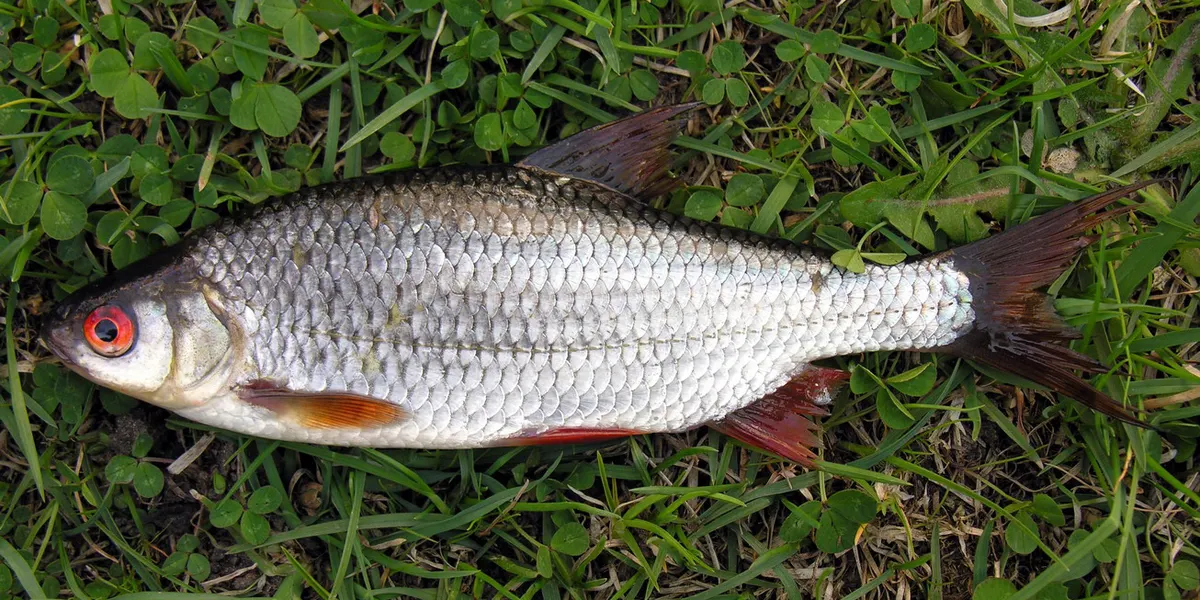
A silver roach with red eye and orange fins lying on grass
Photo: Algirdas Β· CC BY-SA 3.0
Typical size
2 oz – 8 oz
A good one
1 lb+ (a 2 lb roach is a specimen)
Length
15 – 30 cm
Best time
All year

πŸ† British record: 4 lb 3 oz (1.9 kg), Linear Fisheries, Oxfordshire (equals a 2006 fish from Northern Ireland) (2024)

How to spot it

A neat, silver fish with a blue-green back, a bright red eye and orange-red lower fins.

The easy way to tell it from a rudd: on a roach the front of the top (dorsal) fin sits directly above the front of the belly (pelvic) fins. Its mouth is level or points slightly down. Roach also cross-breed with bream and rudd, so you'll sometimes catch something in between.

Where to find it

Canals, rivers, lakes, ponds and commercial fisheries right across the UK.

Roach shoal up, often in big numbers. In rivers look for steady, even-paced glides, the edges of weed beds and the crease where fast water meets slow. On canals fish the far-bank cover and the middle channel (the deeper 'track'). In winter they pack into deeper, slower water: marinas, boatyards, bridges and deep bends.

Find waters near you

Feeding habits

Roach eat almost anything small: bloodworm and other insect larvae, shrimps, snails, seeds and soft weed. They feed from the bottom right up to mid-water, and they'll come up in the water to take bait that is falling slowly.

They bite through the day, but dawn, dusk and slightly coloured water are best. Unlike many fish, roach keep feeding in the cold, which makes them a winter favourite.

Best time: All year. Autumn and winter are excellent, especially on rivers once the leaves are off. Best at dawn and dusk.

Favourite baits

  • Maggots

    Red or white, single or double on the hook.

  • Casters

    Tend to pick out the better roach.

  • Bread punch or flake

    Brilliant on canals and in clear water.

  • Hempseed

    Loose-fed to hold a shoal; tare or hemp on the hook for the big ones.

  • Pinkies and small worms

How to catch it

Waggler float

Lakes, canals and slow rivers

Rod
11–13 ft float rod
Reel
Small fixed-spool (size 2500)
Line
3 lb main line
Hook
Size 18–20, on a 2 lb hooklength
Bait
Single maggot or caster

Set the float so the bait sits just off the bottom. Bunch most of the shot under the float and spread a few small ones down the line so the bait falls slowly. Throw in a few maggots every cast. Strike when the tip dips or lifts.

Stick float (trotting)

Flowing rivers

Rod
13 ft float rod
Reel
Fixed-spool or centrepin
Line
3 lb main line
Hook
Size 18, on a 2 lb hooklength
Bait
Maggot, caster or hemp

Shot the float with small shot spread evenly down the line ('shirt-button' style). Let it run down the swim at the pace of the current, holding it back now and then so the bait rises enticingly. Feed a few maggots every trot.

Handling and rules

Wet your hands before touching any fish. Roach are hardy, but return them quickly and gently. A disgorger helps if the hook is a little deep.

πŸ“œ Rules and seasons

On rivers, streams and drains in England and Wales there's a close season for coarse fish from 15 March to 15 June. Most lakes, ponds and canals are open all year, but check the water's own rules.

Check the official rules on gov.uk

Watch: catching roach

Videos open on YouTube. We don't make them, but we think they're good.