

All fish
PredatorsπŸ‡¬πŸ‡§ Native

Pike

Esox lucius Β· Also called Jack (small pike)

The UK's top freshwater predator. Fast, toothy and powerful, and more delicate than it looks. Fish for pike with the right kit.

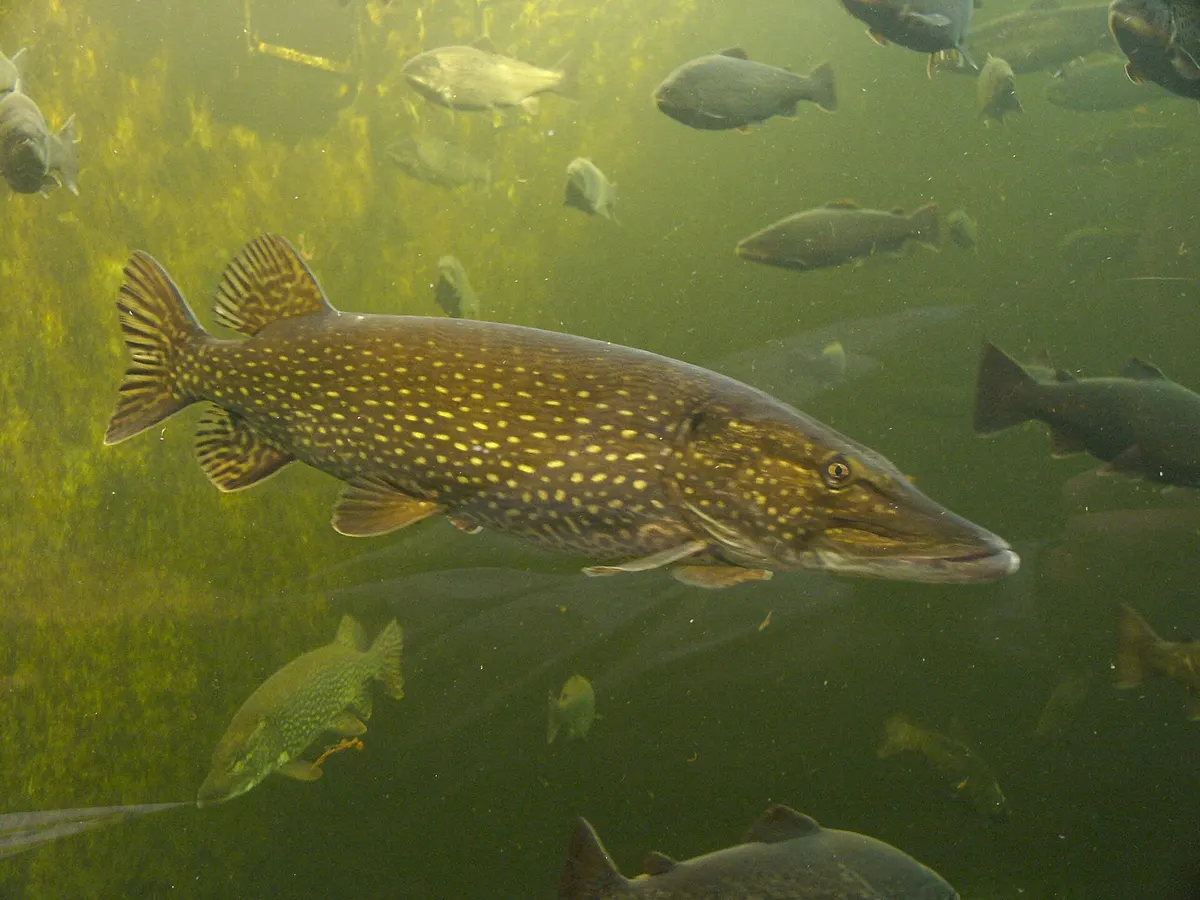
A spotted pike lurking above weed in clear water
Photo: Georg Mittenecker Β· CC BY-SA 2.5
Typical size
3 lb – 10 lb
A good one
15 lb (20 lb+ is a specimen)
Length
50 – 100 cm
Best time
Autumn and winter (roughly October to March)

πŸ† British record: 47 lb 5 oz (21.46 kg), Chew Valley Lake, Somerset (2024)

How to spot it

Long, torpedo-shaped body, olive-green with rows of pale cream spots. Flat, duck-bill jaws full of sharp teeth. The top fin sits far back near the tail, which gives the pike its explosive burst of speed.

Small pike under about 5 lb are called jacks.

Where to find it

Lakes, gravel pits, reservoirs, canals, drains and slower rivers.

Pike ambush their prey, so look for cover: reed beds, lily pads, weed edges, sunken trees, drop-offs into deeper water and slacks off the main river flow. In winter they follow the shoals of small fish, so find the roach and bream and the pike won't be far away.

Find waters near you

Feeding habits

Pike eat fish, mainly roach, rudd, bream and smaller pike, plus the odd frog, duckling or rat. They're opportunists and will happily pick up a dead fish from the bottom.

Feeding comes in short spells, often at first light, at dusk or when the weather changes.

Best time: Autumn and winter (roughly October to March). Many clubs ban pike fishing in summer because pike tire badly in warm water.

Favourite baits

  • Sea deadbaits

    Sardine, mackerel, smelt or herring.

  • Coarse deadbaits

    Roach or small bream, bought frozen.

  • Lures

    Spinners, spoons, soft plastics, jerkbaits.

  • Livebaits

    Only where the water's rules allow, and only fish caught from the same water.

How to catch it

Deadbait on the bottom

Lakes, drains and slow rivers in winter

Rod
12 ft rod, 2.75–3 lb test curve
Reel
Large fixed-spool or baitrunner
Line
15–20 lb mono or 30–50 lb braid
Hook
Two size 8–6 semi-barbless trebles on a wire trace (at least 45 cm, 20 lb+)
Bait
Half a mackerel or a whole sardine

Cast near cover, set a drop-off alarm or float so line can run freely, and never leave the rods. Strike as soon as the line starts running steadily. Striking early stops the pike swallowing the bait.

Lure fishing

Any water, all year where allowed

Rod
8–9 ft lure rod, 20–60 g
Reel
Fixed-spool (3000–4000)
Line
30 lb braid
Hook
Lure's own hooks, with a wire trace
Bait
Spinner, spoon or soft-plastic shad

Fan casts around the swim and wind back steadily, varying speed and depth. Work along reed edges and over drop-offs. Always use a wire trace: pike bite straight through nylon.

Handling and rules

Don't fish for pike until you've watched someone unhook one. You'll need a big landing net, an unhooking mat, long-nosed forceps and wire cutters. Lay the pike on the mat, slide two fingers under the gill plate to the chin to open the mouth (never in the gills themselves), and remove the hooks quickly. Return it as soon as possible.

πŸ“œ Rules and seasons

On rivers, streams and drains in England and Wales there's a close season for coarse fish from 15 March to 15 June. Most lakes, ponds and canals are open all year, but check the water's own rules. On rivers you may only keep one pike a day, up to 65 cm, but nearly all anglers return every pike.

Check the official rules on gov.uk

Watch: catching pike

Videos open on YouTube. We don't make them, but we think they're good.