

Eel
Anguilla anguilla · Also called European eel
A critically endangered traveller that's swum thousands of miles to reach our waters. Every eel you catch must go back.
- Typical size
- 8 oz – 2 lb
- A good one
- 3 lb
- Length
- 40 – 80 cm
- Best time
- Warm summer nights
🏆 British record: 11 lb 3 oz (5.074 kg), A southern stillwater (2024)
How to spot it
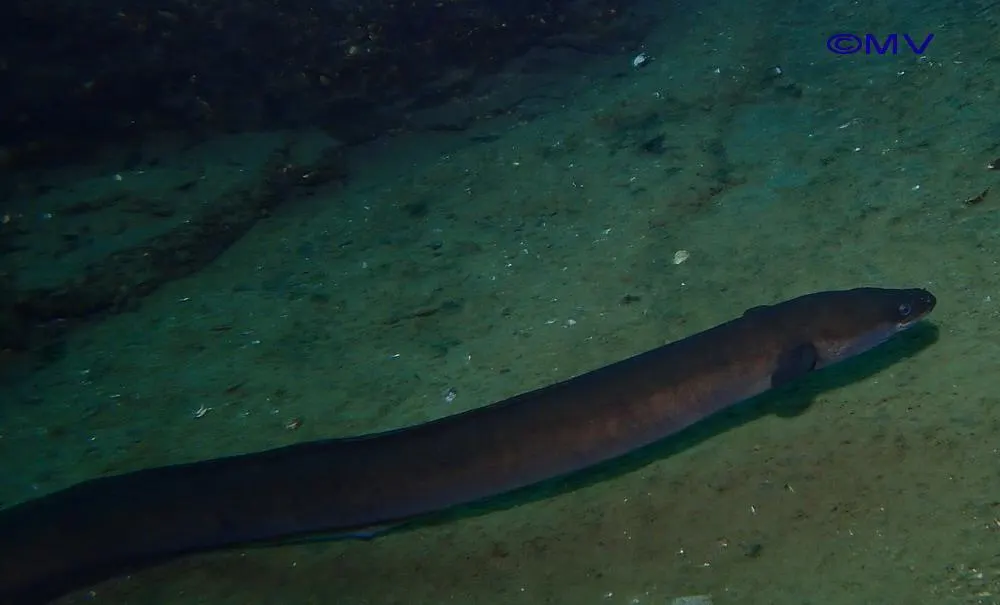
Long, snake-like body covered in thick slime. One continuous fin runs along the back, round the tail and along the belly. Small pectoral fins just behind the head.
Where to find it
Almost every kind of water: rivers, lakes, canals and ponds, even small streams. Eels hide in mud, weed and among stones by day.
Feeding habits
Eels hunt and scavenge at night: worms, insects, small fish and crayfish. They're often caught by accident on worm or maggot after dark.
Best time: Warm summer nights.
Favourite baits
Worms
The usual accidental catch.
Small fish deadbaits
Handling and rules
Eels are tricky to handle and often swallow the hook. Unhook them in the landing net or on a wet mat, using a damp cloth to hold them gently. If the hook is deep, cut the line as close to the mouth as you can rather than trying to dig it out.
📜 Rules and seasons
Any eel you catch must be released alive. The European eel is critically endangered. On rivers, streams and drains in England and Wales there's a close season for coarse fish from 15 March to 15 June. Most lakes, ponds and canals are open all year, but check the water's own rules.
Check the official rules on gov.uk