

All fish
Carp, tench & river giantsπŸ‡¬πŸ‡§ Native

Barbel

Barbus barbus

The river's hardest fighter. Built for strong flows, barbel give heart-stopping bites and runs.

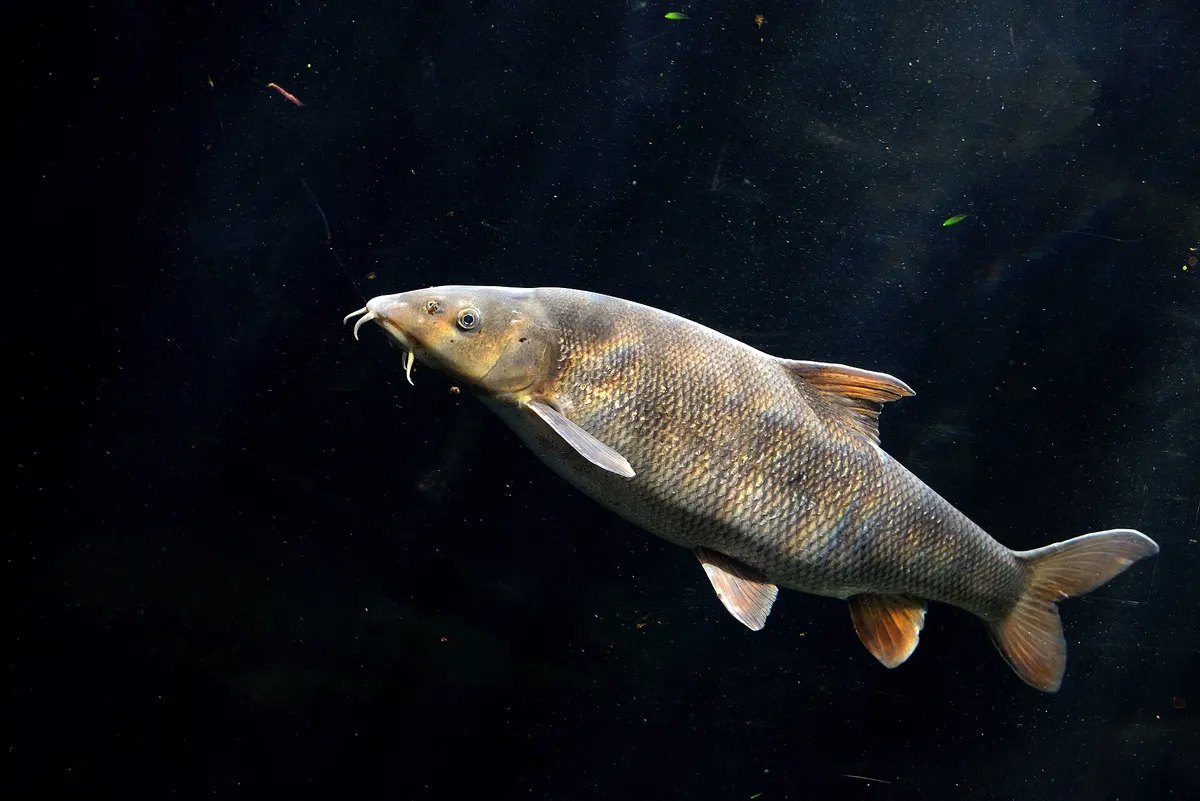
A barbel showing its whiskers and flat belly, against a dark background
Photo: Linie29 Β· CC BY-SA 3.0
Typical size
3 lb – 8 lb
A good one
10 lb (15 lb+ is a specimen)
Length
40 – 80 cm
Best time
June to October evenings

πŸ† British record: 22 lb 1 oz (10.014 kg), King's Weir, River Lea (2025)

How to spot it

Long, torpedo-shaped body with a flat belly, made for hugging the riverbed. The mouth is underneath the head with four barbels (whiskers), two on the top lip and two at the corners. Bronze-gold back and orange-red lower fins.

Where to find it

Fast to medium-paced rivers with clean gravel bottoms, such as the Severn, Trent, Wye, Thames, Ribble and many more.

Look for gravel runs between streamer weed, weir pools, the tail of shallows, depressions in the riverbed and under overhanging trees. They often hold tight to snags.

Find waters near you

Feeding habits

Barbel grub on the bottom for insect larvae, shrimps, crayfish and small fish, turning over stones as they go.

They feed best on warm summer evenings and into dark, and after rain when the river is rising and coloured.

Best time: June to October evenings. Mild winter floods. Rivers are closed 15 March to 15 June.

Favourite baits

  • Halibut pellets

    The modern number one.

  • Boilies

  • Luncheon meat

  • Hempseed

    Loose-fed to get them grubbing.

  • Maggots and worms

How to catch it

Feeder and hair-rigged pellet

Most rivers

Rod
11–12 ft rod, 1.75–2 lb test curve
Reel
Fixed-spool or baitrunner (4000+)
Line
10–12 lb main line
Hook
Size 10–8, hair-rigged
Bait
8–12 mm halibut pellet

Use a big open-end or cage feeder heavy enough to hold bottom, filled with hemp and small pellets. Cast to the same spot regularly. Bites are savage, so never leave the rod. Point it downstream and keep the baitrunner or clutch set so the rod can't be pulled in.

Handling and rules

Barbel fight to exhaustion, so aftercare matters. Keep them in the landing net in the current, head upstream, until they've got their strength back. Hold them upright in the water until they swim off strongly. Never put a barbel in a keepnet.

πŸ“œ Rules and seasons

On rivers, streams and drains in England and Wales there's a close season for coarse fish from 15 March to 15 June. Most lakes, ponds and canals are open all year, but check the water's own rules.

Check the official rules on gov.uk

Watch: catching barbel

Videos open on YouTube. We don't make them, but we think they're good.