

Why fishing?
Fishing is one of the UK's most popular outdoor activities, enjoyed by over three million people. It gets you outdoors, requires patience and skill, and offers the genuine thrill of connecting with wildlife in beautiful places.
Whether you want a quiet morning on a local lake or an adventurous day on a river, there is a style of fishing to suit everyone — and getting started is simpler than you might think.
Step 1: Get your rod licence
Before you fish, you need an Environment Agency rod licence if you're 13 or over in England and Wales. You can buy one online at gov.uk in a few minutes. An annual licence for adults costs around £30. Junior licences for 13–16-year-olds are free.
Children under 13 do not need a licence.
Keep your licence on your phone — you may be asked to show it.
Step 2: Choose somewhere to fish
For your first session, a well-stocked commercial coarse fishery (sometimes called a 'pay and play' lake) is ideal. These are popular, purpose-built venues that:
- Sell day tickets — usually £5–£10
- Have good facilities like parking and toilets
- Are regularly stocked with fish
- Often have helpful staff
- Welcome beginners and families
Search for venues near you using FishingPeg's Waters section.
Step 3: What equipment do you need?
You don't need to spend a lot to start fishing. A basic beginner's kit includes:
- Rod and reel combo — a 10–12ft float rod with a fixed-spool reel
- Line — 4–6lb monofilament
- Floats — a selection of small wagglers
- Hooks — size 12–16 barbless hooks
- Weights/shot — a selection of split shot
- Bait — maggots, sweetcorn or bread
- Net — a small landing net
- Rod rest and keep net — optional but useful
Many tackle shops sell starter kits for around £20–£40. Some fisheries also hire out equipment.
Step 4: Setting up your rod
For float fishing (the simplest method for beginners):
- Thread your line through all the rod rings and attach your reel.
- Thread the line through your float so it stands upright.
- Pinch two or three pieces of split shot below the float to weigh it down.
- Tie a hook to the end of the line using a simple tucked half-blood knot.
- Set the depth so your bait hangs just above the bottom.
When set up correctly, most of the float should be underwater with just the tip visible above the surface. When a fish takes the bait, the float will dip or move — strike!
Step 5: Catching your first fish
Cast out gently — you don't need to cast far on most commercial fisheries. Bait the hook with a single maggot or small piece of sweetcorn, cast a few metres out and watch your float.
Be patient. Stay quiet — vibrations travel through the bank and spook fish. Keep your rod tip low and be ready to strike gently when the float dips.
When you hook a fish, keep the rod tip up and let the fish fight against the bend of the rod. Guide it into your landing net before lifting it out of the water.
Step 6: Handling fish safely
Wet your hands before handling any fish. Support the fish in the water while you remove the hook — use forceps or a disgorger for small hooks.
If you are photographing the fish, keep it low over the water and return it promptly. Never squeeze a fish or drop it.
Most fisheries operate catch-and-release. Return the fish headfirst into the water and hold it gently until it swims away under its own power.
Watch how it's done
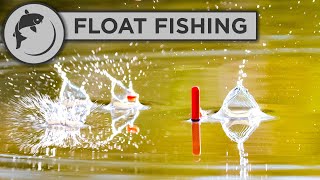 Float Fishing For Beginners: Full GuideFishing Tutorials · YouTube ↗
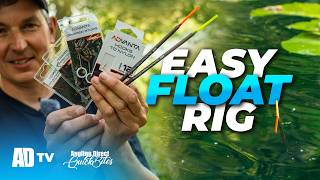 How To Tie A Simple Float RigAngling Direct TV · YouTube ↗
 Do You Need a Fishing/Rod Licence?Angling Direct TV · YouTube ↗
Videos open on YouTube. We don't make them, but we think they're good.